Thinking about adding an ADU to your Menlo Park property? You’re not alone. ADUs can create flexible living space, long-term rental income, or room for multigenerational living, but the rules and costs can be confusing. In this guide, you’ll learn how ADU rules apply in Menlo Park, what a realistic budget and timeline look like in the Bay Area, and the key steps to keep your project on track. Let’s dive in.
ADU basics in Menlo Park
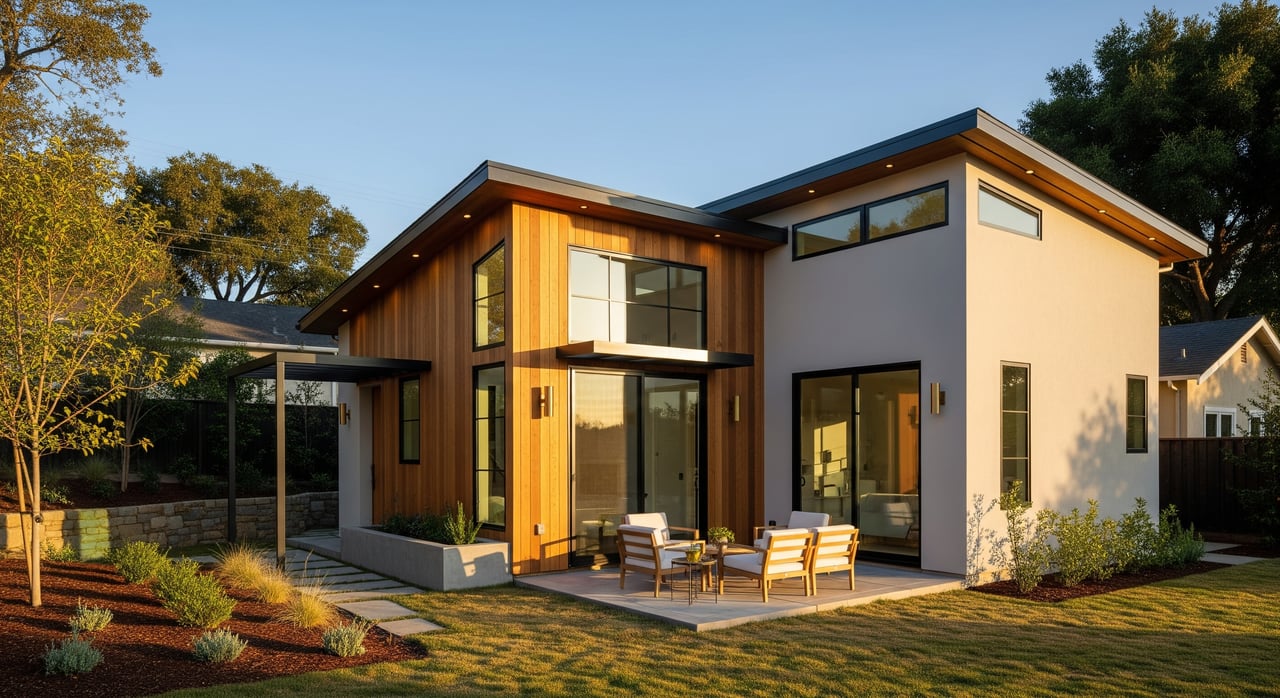
An accessory dwelling unit is a secondary home on the same lot as a primary residence. You can build a detached ADU, attach one to your home, convert an existing space like a garage, or create a junior ADU inside the existing footprint.
California law requires cities to process many ADU applications through a ministerial permit path, which means no public hearing in most cases. Menlo Park follows state rules while applying local standards such as setbacks, height, lot coverage, and utility requirements.
State rules overview
State law shapes what Menlo Park must allow. Key takeaways for you:
- Many single-family and multi-family lots can add at least one ADU, and often a junior ADU as well.
- Cities cannot enforce large minimum lot sizes or most long-term owner-occupancy requirements for new ADUs created under current law. Confirm the latest rules with the City.
- ADUs up to 1,200 square feet may be allowed in many cases, subject to local limits like setbacks, height, and floor area.
- Parking mandates are limited, and spaces may be waived in certain locations near transit.
For background, see the state’s overview in the California Department of Housing and Community Development’s state ADU guidance.
Local standards to confirm
Menlo Park applies site-specific standards. Before you design, confirm:
- Zoning district and whether detached, attached, or conversion ADUs are allowed
- Maximum ADU size for your lot and whether it scales with the primary home
- Setbacks, height limits, and any lot coverage or FAR constraints
- Parking requirements or exemptions based on transit proximity
- Whether design or architectural review applies in your neighborhood
- Tree protection rules and any heritage or landmark overlays
- Utility connection needs for sewer, water, stormwater, and electrical panels or solar
The Planning Division can confirm current standards and provide submittal checklists.
Permit steps and timing
Here is a typical sequence for Menlo Park projects:
1) Pre-application
Contact the Planning Division to verify zoning, overlays, flood zones, and any design review triggers. Gather your parcel map, title report for easements, and utility provider details.
2) Design and plans
Select the ADU type and prepare site and floor plans, elevations, and utility plans. You may need an architect, structural or civil engineer, and sometimes an arborist if large trees are near the proposed site.
3) Submittal and plan check
Most ADUs use ministerial review. Expect 1 to 3 plan check cycles. Coordinate with water, sewer, and electric providers for capacity checks or upgrades.
4) Construction and inspections
After permits, your project proceeds with standard inspections for foundation, framing, mechanical, plumbing, electrical, and final. If your work affects the public right of way, you may need encroachment permits.
Typical timeline ranges
- Pre-application and feasibility: 1 to 4 weeks
- Design and permit package prep: 2 to 12+ weeks
- Plan check and permitting: 4 to 16 weeks typical
- Construction: 3 to 9 months depending on scope
From decision to occupancy, most Menlo Park ADUs take 6 to 12 months. Complex sites or additional reviews can extend to 12 to 18+ months.
ADU costs in Menlo Park
Bay Area ADU budgets run higher than the national average. Typical ranges in San Mateo County depend on scope, finishes, and site conditions:
- Garage or interior conversion: about $50,000 to $200,000
- Attached ADU or interior addition: about $150,000 to $350,000
- Detached ADU (new structure, 400 to 1,000+ sq ft): about $200,000 to $600,000+
- Rough per-square-foot guide: about $200 to $600+ per sq ft
These are ballpark figures. Your actual cost will depend on design choices, contractor pricing, and utility needs.
Cost drivers to plan for
The biggest variables usually include:
- Site work and foundation, especially on sloped lots or challenging soils
- Utility connections or upgrades such as sewer laterals, water meter upsizing, and new electric service panels
- Structural and seismic work on older buildings during conversions
- Fire and life-safety requirements, including sprinklers and fire separation where required
- Finish level, built-ins, and custom cabinetry
- Permits, impact fees, and utility capacity fees as applicable
Utility upgrades alone can add $10,000 to $50,000 or more. Ask your design team and utility providers to scope these early.
Financing options
Owners often use a mix of:
- Cash, construction loans, or HELOCs
- Cash-out refinances
- Renovation loans such as FHA 203(k), subject to lender criteria
Local incentives change over time, so check current programs and confirm terms with your lender.
Feasibility checklist
Use this quick list to gauge fit before you invest in plans:
- Confirm parcel zoning and ADU allowance with Menlo Park Planning
- Check setbacks, lot coverage, and FAR against your lot and home size
- Choose your ADU type: detached, attached, conversion, or junior ADU
- Note any protected trees, heritage overlays, or historic resources
- Verify sewer and water provider and any capacity or upgrade needs
- Ask about parking requirements and transit-based exemptions
- Get a preliminary budget from a local architect or design-build firm
- Review CC&Rs or HOA rules that may restrict ADUs
- Clarify whether design review or neighborhood notice applies
- Speak with your lender and tax professional about financing and taxes
Special local considerations
A few Menlo Park items to put on your radar:
- Parking and transit proximity. State law limits new parking requirements and often waives spaces near transit. Confirm your location and street conditions.
- Utilities and sewer. Most homes connect to city sewer, but capacity checks or lateral work may be required. If a property is on septic, county health rules may limit feasibility.
- Trees and site protection. Protected trees can limit placement or increase costs, and removal can require permits or mitigation.
- Neighborhood overlays. Historic districts or special plans may add standards, including design review.
- Short-term rentals. Some cities restrict ADUs from being used as short-term rentals. Confirm Menlo Park’s current policy before planning for that use.
- HOAs and CC&Rs. Private rules may be more restrictive than city code.
Renting your ADU
You can rent your ADU after passing final inspection and receiving your certificate of occupancy. State law has significantly limited owner-occupancy requirements for many new ADUs, but you should confirm Menlo Park’s current policy. If you plan to rent, set expectations for utilities, parking, and trash service, and confirm any local registration requirements.
Your first three steps
- Call the Menlo Park Planning Division for a pre-application check of zoning, overlays, and standards.
- Pull a parcel map or order a site survey to verify lot lines, easements, and setbacks.
- Get at least one preliminary estimate from a local architect or design-build contractor with Menlo Park ADU experience.
How Luxuriant Realty helps
A well-planned ADU can enhance lifestyle and long-term value, but the difference is in execution. With a construction-informed approach and local market expertise, we can help you:
- Align scope, budget, and likely timeline with market realities
- Coordinate early vendor outreach and connect you with experienced local designers and builders
- Evaluate rental strategy and, if desired, provide leasing and property management once your ADU is complete
Ready to explore your ADU’s potential in Menlo Park? Connect with Luxuriant Realty to discuss your property, budget, and timeline.
FAQs
What ADU types can I build in Menlo Park?
- You can typically pursue detached, attached, or conversion ADUs, and sometimes a junior ADU, subject to zoning, setbacks, lot coverage, height, and utility standards.
How big can a Menlo Park ADU be?
- State law allows ADUs up to 1,200 square feet in many cases, but your final size may be limited by local setbacks, floor area ratio, lot coverage, and design standards.
Do I need to provide new parking for an ADU?
- Often no. State rules limit parking mandates and may waive spaces near transit; confirm your parcel’s exact requirements with Menlo Park Planning.
How long does an ADU project take?
- Typical projects run 6 to 12 months from idea to occupancy, with 4 to 16 weeks for plan check and 3 to 9 months for construction, depending on scope and site.
What does a Menlo Park ADU cost?
- Conversions often range from about $50,000 to $200,000, attached ADUs from about $150,000 to $350,000, and detached ADUs from about $200,000 to $600,000+ depending on finishes and site conditions.
Can I rent my Menlo Park ADU long term?
- In many cases yes. State law significantly limited owner-occupancy rules for new ADUs, but you should confirm the City’s current policy and any registration requirements.
Who should I contact first about feasibility?
- Start with Menlo Park’s Planning Division for zoning and standards, then speak with a local architect or design-build firm to scope design, utilities, and budget.