The Menlo Park Block That's Been Throwing the Same Party for 50 Years
On the afternoon of August 2, someone on Rosefield Way started banging a pot with a wooden spoon, and up and down the horseshoe of Hermosa Way, neighbors who had been doing this for half a century knew exactly what it meant. Time to eat. Time to gather. Time to do the thing this particular block has done every year since 1976.
Fifty years is long enough that most of the people who started the tradition have moved away, passed on, or handed the folding tables to their kids. It is also long enough that the tradition has outlasted almost every other explanation people reach for when they talk about what makes a neighborhood good. This block did not get lucky with a park or a school boundary. It built something on purpose, then kept building it, year after year, until the party itself became the infrastructure.
The block in question sits off Santa Cruz Avenue, where Rosefield Way and Hermosa Way curve into each other in the shape locals still describe as a horseshoe. According to the residents interviewed by The Almanac for its August 11 feature on the anniversary, the tradition traces back to a group of young families who moved in during the late 1960s and early 1970s and started socializing through their kids before the block party was ever a formal event. Longtime resident Skip Bushee, who has lived there since 1978, put it simply: "There was something in the water."
Whatever it was, it produced a habit that has survived five decades of turnover, remodels, and the entire rise and partial retreat of Silicon Valley in its backyard. That is the part worth sitting with. Plenty of Bay Area streets have had a good run of friendly neighbors for a few years. Fewer have a documented, continuous tradition older than most of the houses' second owners.
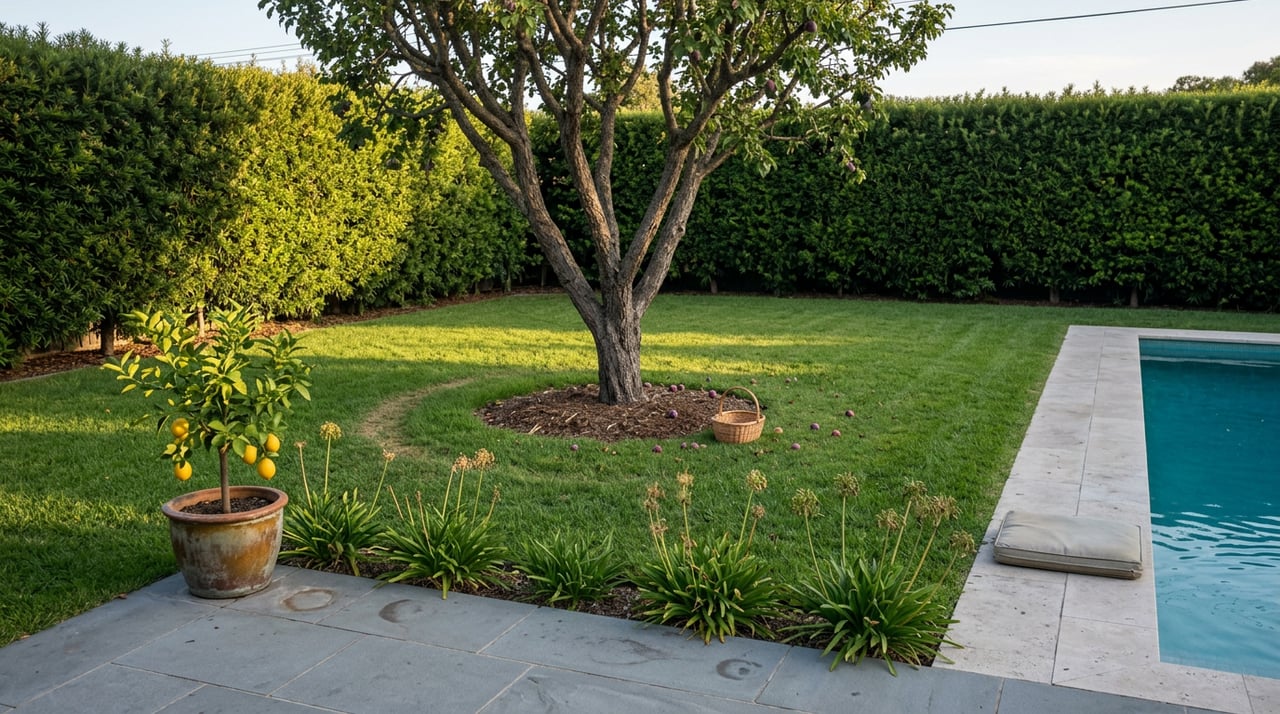
The block party itself is the visible event, but it is the smaller, everyday behaviors around it that tell you what is actually going on here. Joan Hamilton, who has lived on the block for 30 years, described a plum tree across the street that triggers an email whenever it comes into fruit: pick your own, help yourself, no need to ask. "Everybody shares everything," she said.
Norm Abt has come home from work to find four or five kids in his pool, none of them his own, and treated it as unremarkable enough to mention only in passing. And when a Tesla charging box caught fire at a house on Hermosa Way six years ago, neighbors did not wait for the fire department. They went into the garage and started pulling belongings out before the trucks arrived, according to Brett Herr's account of the incident.
None of these are amenities in the way a real estate listing would use the word. There is no clubhouse, no HOA newsletter, no line item in a city budget. What exists instead is a set of standing assumptions: that a neighbor's fruit is fair game, that a neighbor's pool is semi-communal in summer, that a fire on your street is everyone's emergency. Those assumptions do not show up in a property description. They show up in fifty consecutive Augusts of the same pot getting banged on the same horseshoe of street.
It is worth noting that Menlo Park already has a quantified answer to the friendliness question, just not one that comes from a neighborhood's own history. Nextdoor's neighborhood profiles assign West Menlo Park a friendliness score of 100 out of 100, ranking it the city's friendliest, with Downtown Menlo Park close behind at 96. Those numbers are generated from resident sentiment on the platform, aggregated and compared across neighborhoods citywide.
The Hermosa Way and Rosefield Way block sits within one of these larger Nextdoor-defined areas, but its 50-year block party is not what produced that neighborhood's score. The score is a snapshot of how people currently feel about where they live. The party is a record of what people have actually done, continuously, since before most scoring algorithms existed. Both are true at once, and neither one substitutes for the other. A high friendliness rating tells you people like their neighborhood right now. A tradition that has survived five decades tells you the mechanism that produces that feeling is durable enough to outlast the people who built it.
The Hermosa Way tradition is distinctive, but it is not the only version of this pattern in Menlo Park. The Suburban Park, Lorelei Manor, and Flood Triangle neighborhoods in the eastern part of the city, bounded by Marsh Road and Highway 101, have their own long-running social fabric: cul-de-sac cocktail parties that residents have hosted for years, an active homeowners' association in Lorelei Manor that was an early adopter of neighborhood social apps, and a reputation among longtime residents like Doug Bui for the kind of accessibility and community feel that convinced him to stay in the area after retiring.
The details differ from Hermosa Way's plum-tree emails and shared pools, but the underlying shape is the same. A neighborhood's real texture gets built by specific people making specific small decisions over long stretches of time: who organizes the party, who starts the email chain, who decides a stranger's fire is worth running toward. It is not a function of square footage or proximity to El Camino Real. It is closer to an accumulated habit, one that a new resident can join but cannot manufacture on day one.
That distinction matters for anyone trying to understand what they are actually buying into when they choose a Menlo Park street. A listing can tell you the lot size and the school assignment. It cannot tell you whether the block has fifty years of pot-banging behind it, or whether that kind of thing is still being built. The only way to find out is the way the Almanac found out: by talking to the people who have already been there long enough to remember how it started.
A few things are true of Hermosa Way's version of this that are worth keeping in mind if you are curious whether your own block has something similar quietly running in the background:
None of that is something a real estate agent can point to on a walkthrough. It is something you notice by paying attention to the neighborhood you are already in, or by asking the neighbors on a street you are considering how long the block has been doing whatever it does.
If you are weighing a move within Menlo Park, or trying to understand what makes one street feel different from another a few blocks over, that conversation is worth having before the paperwork starts. Luxuriant Realty works across Menlo Park's individual neighborhoods every day and can talk through what we've seen on the ground, block by block. Reach out for a personalized consultation whenever you are ready.
Experience the pinnacle of real estate excellence with Luxuriant Realty. Their dedicated team ensures a seamless and stress-free journey whether you're buying, selling, or managing properties, allowing you to elevate your lifestyle effortlessly.
LUXURIANT REALTY
885 OAK GROVE AVE, STE 302, MENLO PARK, CA 94025 CA DRE# 02190360 | NMLS# 2464074