Santa Cruz Avenue Wasn't Missing Customers. It Was Missing Permission.
Before Windy Hill Ventures could ask Menlo Park to let a nail salon or a fitness studio move into a ground-floor storefront on Santa Cruz Avenue, the company had to write the city a check. Public records show it paid at least $57,658 in staff processing fees between November 2024, when it filed the application, and the end of March 2025 alone. The city never disclosed what its staff billing rates were, or provided records past that date, so the true final cost of asking permission is still unknown.
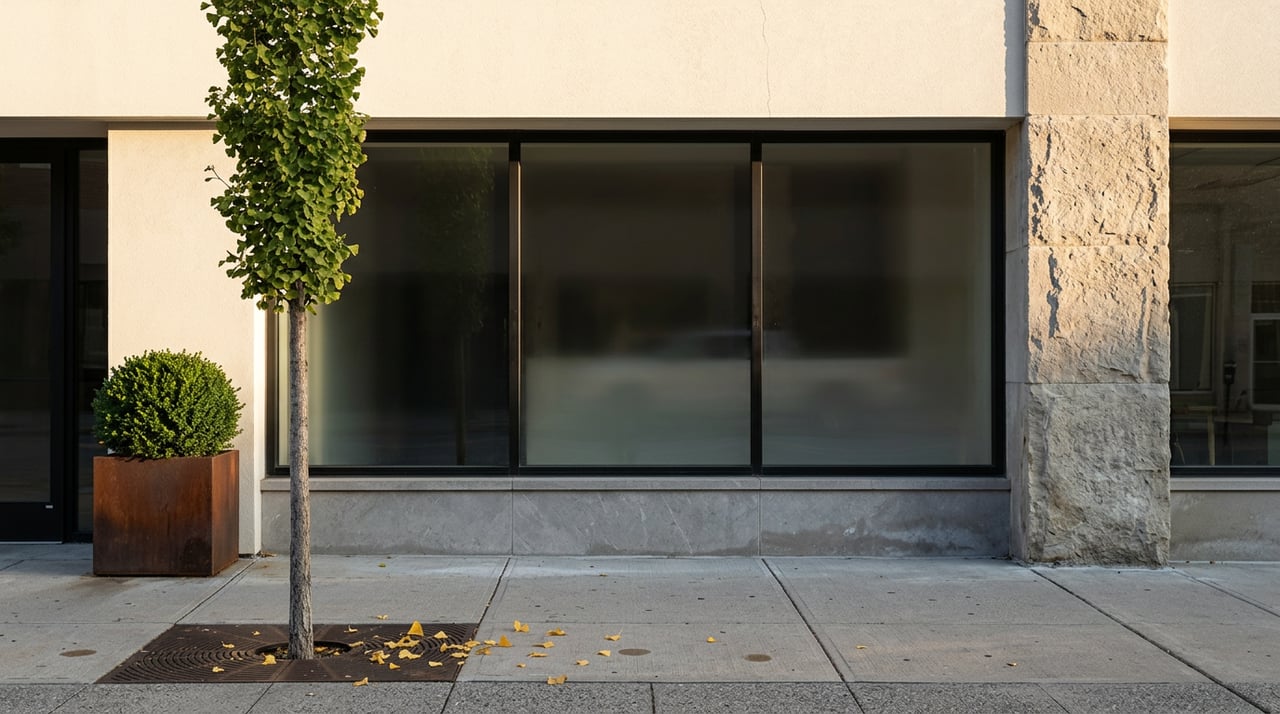
That is the detail that reframes everything else about downtown Menlo Park's empty storefronts. For years, the plate-glass vacancies along Santa Cruz Avenue read like a verdict on the neighborhood, evidence that even a wealthy Peninsula downtown couldn't support retail anymore. The real explanation is less about demand and more about a rulebook. Under the city's 2012 El Camino Real/Downtown Specific Plan, an entire category of businesses that could have paid the rent and opened the doors was simply not allowed to lease the space. It took a landlord over a year and a half, a full public hearing process, and a five-figure fee just to get the city to admit the rule wasn't working.
If you're weighing Menlo Park against another Peninsula downtown right now, that distinction matters more than a vacancy count. A downtown that's empty because nobody wants to be there is a different market than a downtown that's empty because the zoning code wouldn't let interested tenants in.
Until this summer, Santa Cruz Avenue operated under tighter rules than the rest of downtown Menlo Park. Personal service businesses like spas, salons, and barbers were generally restricted to upper floors. Small-scale recreation, meaning gyms and arcades, was prohibited outright. Banks were capped, animal clinics were not permitted, and back-of-house space in many buildings sat unused as storage because converting it to office use wasn't allowed either.
On June 23, 2026, the Menlo Park City Council voted unanimously to change that, adopting a scaled-back version of what the Planning Commission had recommended a month earlier. Here's the shift in plain terms:
| Use | Before June 23, 2026 | After June 23, 2026 |
|---|---|---|
| Spas, salons, barbershops | Upper floors only | Allowed ground floor, no permit required |
| Gyms and arcades | Prohibited | Allowed with a use permit, Planning Commission review |
| Massage parlors | Prohibited downtown | Still prohibited in the downtown core |
| Banks | Already present, roughly 28,000 sq ft | Capped at 30,000 sq ft total |
| Back-of-space office conversion | Not allowed | Allowed only in limited circumstances, with public benefit fees |
Notice what didn't change. Massage parlors are still excluded. Banks got a ceiling, not a green light, since the city has roughly 28,000 square feet of financial institutions on Santa Cruz Avenue already and set the new cap at 30,000. This wasn't a blanket deregulation. It was a targeted correction to a rule that had already run its course.
The application came from Windy Hill Ventures, a Palo Alto-based commercial investment firm, and specifically from its holding at 870 Santa Cruz Ave. Company co-founder Tod Spieker, a Menlo Park native, put the problem plainly at a Planning Commission hearing: downtown has had a retail vacancy problem for years, and building owners don't want to invest in properties they can't fill with tenants who can actually afford the rent.
The example Windy Hill pointed to was its own tenant. Luminaire, the furniture store occupying part of the 870 Santa Cruz building, wanted to stay downtown but could not afford to lease a space that large. The company needed to shrink its footprint, but the old zoning code didn't give the building owner a legal way to backfill the freed-up square footage with a spa, a fitness studio, or a service business that might actually pay competitive rent. The rear portions of many downtown buildings, Spieker told the Planning Commission, were being used for storage rather than as productive space, because converting them to office use wasn't permitted either.
Councilmember Drew Combs put the verdict on the specific plan in blunt terms at the June 23 meeting, calling it close to a complete failure at revitalizing Santa Cruz Avenue. That's a notable admission from a sitting council member about a policy his own city had enforced for fourteen years.
The El Camino Real/Downtown Specific Plan wasn't written by people who wanted an empty downtown. It was adopted to cultivate a retail-focused streetscape, the kind of storefront-forward, pedestrian-active corridor that planners in the early 2010s believed would keep a downtown lively. The theory made sense at the time. E-commerce hadn't yet gutted small retail margins the way it eventually would, and a plan that restricted personal services and recreation to protect ground-floor retail looked like it was defending something valuable.
Fourteen years later, the businesses that could have filled those spaces, the spas and gyms and fitness studios that have become the actual growth category in small commercial retail almost everywhere, were legally locked out of the one corridor built specifically to be Menlo Park's commercial heart. Meanwhile large-format retail and traditional restaurant tenants, the only uses the plan fully welcomed, had gotten pickier about rent and square footage. The plan wasn't protecting Santa Cruz Avenue's vibrancy. It was restricting the pool of tenants who could rescue it.
For a buyer comparing Menlo Park to Palo Alto, Redwood City, or Los Altos, the empty storefronts you might notice walking Santa Cruz Avenue today are not a reliable signal about the neighborhood's underlying draw. They're a snapshot of a zoning code in transition. The changes took effect immediately upon council approval, which means the legal door for spas, salons, and fitness studios to open on the ground floor is open now, as of this writing, even if the buildout and lease-up process for any individual storefront still takes time.
For anyone evaluating downtown-adjacent property as an investment, the more interesting number isn't a vacancy count. It's the fact that a private landlord had to spend over a year and a half and tens of thousands of dollars in city fees to get a single zoning correction through, and that the correction still preserved real limits, including the outright ban on massage parlors and the hard cap on bank square footage. That's useful information about how Menlo Park actually governs its commercial core: change is possible, but it's incremental, deliberate, and expensive to initiate. If you're underwriting a downtown-facing property with plans to convert its use, budget for that process, not just the permit fee schedule.
The practical takeaway for a homebuyer or seller near downtown is simpler. The visible emptiness along Santa Cruz Avenue reflected a supply-side constraint, not a demand-side failure. Menlo Park didn't lose its appeal. Its zoning code just hadn't caught up to what tenants and residents actually wanted from that stretch of street. That gap is now closing, and it closed through a public process anyone can read, not through a market correction that happened quietly and invisibly.
The zoning change is recent enough that lease-up activity on Santa Cruz Avenue is still unfolding. Watch for which of the newly eligible use types, personal services versus small-scale recreation, actually materializes first, since gyms and arcades still require individual use permits and Planning Commission approval while spas and salons do not. That distinction alone will shape how fast the corridor visibly changes over the next year.
If you're weighing a purchase near downtown Menlo Park, or you own a commercial or mixed-use property along the corridor and are wondering what the new rules mean for your building specifically, that's a conversation worth having with someone who understands both the zoning history and the underwriting math. Luxuriant Realty pairs construction and engineering-informed due diligence with boutique, hands-on guidance for exactly this kind of decision. Elevate Your Lifestyle. Request a personalized consultation.
Experience the pinnacle of real estate excellence with Luxuriant Realty. Their dedicated team ensures a seamless and stress-free journey whether you're buying, selling, or managing properties, allowing you to elevate your lifestyle effortlessly.
LUXURIANT REALTY
885 OAK GROVE AVE, STE 302, MENLO PARK, CA 94025 CA DRE# 02190360 | NMLS# 2464074