Remote-Work Life In Menlo Park’s Homes And Cafés
If your workday can happen anywhere, where should “anywhere” be? In Menlo Park, that answer often comes down to the balance you want between a polished home setup and easy access to cafés, coworking, and downtown errands. If you are weighing a move or a home purchase here, this guide will help you understand how Menlo Park supports remote-work life and what to look for before you buy. Let’s dive in.
Menlo Park offers a strong mix of daily comfort and practical infrastructure for people who work from home. The city describes itself as tree-lined and commercially active, and it also benefits from a moderate-to-warm climate with an average of 265 sunny days per year. That combination can make a big difference when you want brighter workdays and easier midday breaks.
The city also sits firmly in Silicon Valley’s tech orbit, with major employers including Meta, Snowflake, SRI International, Pacific Biosciences, Exponent, Grail, and CSBio. For many buyers, that means you are choosing a place where hybrid and remote work already fit the rhythm of daily life. It feels connected to the broader tech economy without losing the convenience of a local downtown.
Household connectivity is another clear advantage. Census Bureau QuickFacts show that 97.9% of households in Menlo Park have a computer and 96.7% have a broadband subscription. Those numbers do not guarantee the same setup in every home, but they do point to a city where digital life is well established.
If your ideal remote-work routine includes coffee runs, lunch meetings, and a train option for office days, downtown Menlo Park stands out. The city describes downtown as walkable, with cafés and outdoor dining supported by the Streetary Program. A public plaza is also being added on the 600 block of Santa Cruz Avenue, which adds to the area’s everyday usability.
Downtown is also within walking distance of the Menlo Park Caltrain station. That matters if your schedule shifts between home days and commute days, or if you simply want the option to leave the car parked. After getting off the train, you can reach restaurants, Kepler’s Books, and Fremont Park on foot.
The lifestyle side is worth noting too. Downtown hosts a Sunday farmers market and summer concerts at Fremont Park, which can make flexible schedules feel more rewarding. When your workday has room for a quick errand or a short break outdoors, that kind of layout becomes a real quality-of-life feature.
One of the biggest questions for remote workers is simple: where do you go when you need a change of scene? In Menlo Park, the strongest work-outside-home options are concentrated downtown and around Springline, with the library serving as a useful backup.
Cafe Zoe describes itself as a community coffee café and advertises free Wi-Fi. Its location at Menalto and Gilbert makes it one of the practical local options when you want to step away from your desk without leaving Menlo Park.
Coffeebar has a Menlo Park location at 1149 Chestnut Street. A local listing describes it as having Wi-Fi, outdoor seating, and a setup that works well for laptop use. For many remote workers, that combination is ideal for a focused hour or two between meetings.
Cafe Borrone is described in a local directory as a homey European-style café with ample indoor and outdoor seating. The same listing notes that Wi-Fi is available for work or study, which adds another solid option to your rotation.
The Menlo Park Library is more than a place to browse books. The city says it offers computers, high-speed internet, study and learning spaces, guest Wi-Fi, tables, and technical assistance. It also provides in-library laptop use, plus Wi-Fi hotspot and Chromebook checkout for residents.
That makes the library especially useful as a backup plan. If your home internet is down, your house is noisy, or you just need a quiet reset, having this kind of public resource nearby adds resilience to your remote-work routine.
For buyers who want a more intentionally designed remote-work environment, Springline deserves special attention. The city describes Springline as a 6.4-acre mixed-use development with office, residential, and community-serving uses, plus a publicly accessible dog park. It is one of the clearest examples in Menlo Park of a place designed around live-work convenience.
CANOPY at Springline adds a coworking layer that many hybrid professionals value. Its offerings include community space, customizable private offices, outdoor patio workspace, conference facilities, 24/7 access, natural light, private phone booths, fiber connectivity, and outdoor terraces for meetings, breaks, and focused work. Membership options include virtual office, community table, personal desk, and private office formats.
Springline’s residences also reflect the needs of modern work-from-home living. The residences page notes site-wide high-speed fiber optic wiring, enhanced cellular coverage, operable windows, and private balconies, courtyards, or patios in most homes. It also reports a Walk Score of 93, which reinforces the ease of a less car-dependent routine.
Not every remote worker needs the same kind of home. In Menlo Park, the most useful way to think about housing is as a spectrum between walkable, lower-maintenance living and quieter homes with more separation between work and personal space.
Downtown and Central Menlo are more apartment-heavy areas. If you want to walk to coffee, errands, and Caltrain, these neighborhoods are closely aligned with that lifestyle. They can work well if you value convenience and do not need a large footprint.
That said, layout matters more in these areas. Because apartment living is common, a den, extra bedroom, or true flex space can be more important than headline square footage. If you work from home every day, that distinction can shape your comfort more than you expect.
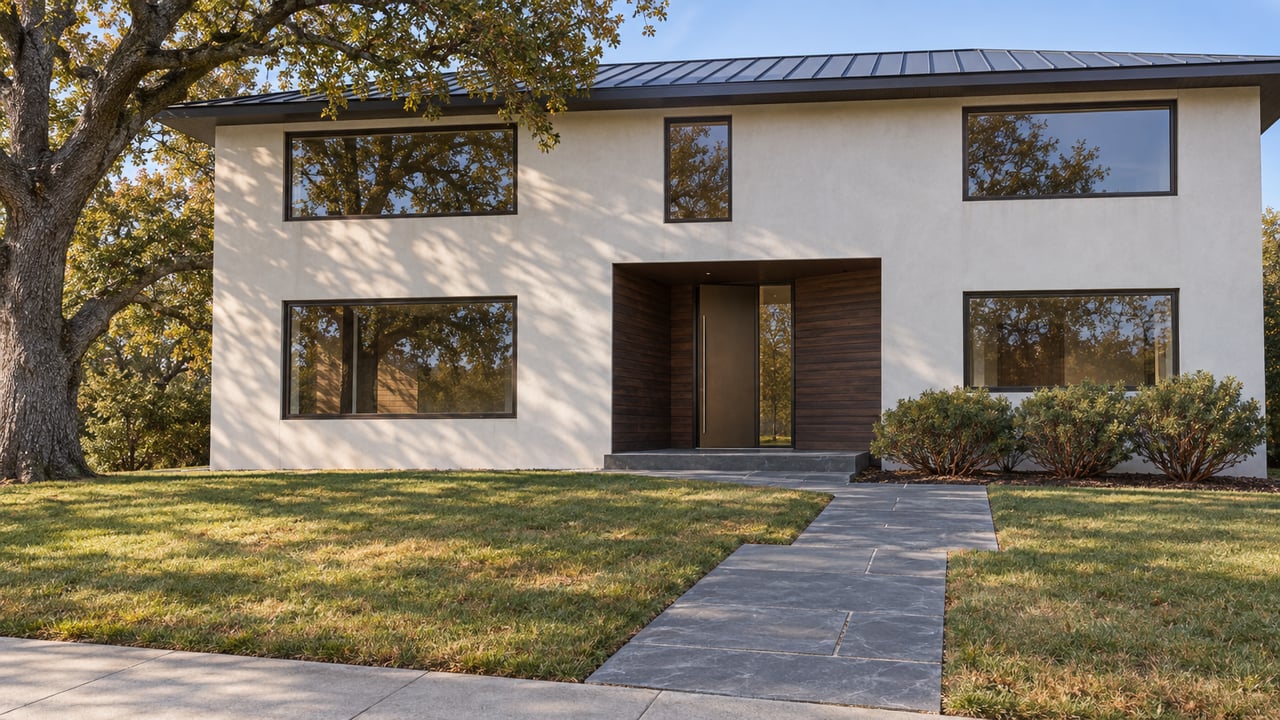
Belle Haven, The Willows, and West Menlo are primarily detached single-family home neighborhoods. For many buyers, these areas are the strongest fit when privacy, a separate office, or yard space sits high on the list. A detached home can make it easier to create a true boundary between work and home life.
This option can be especially appealing if your work involves frequent calls, long focus blocks, or more than one person working from home. Extra rooms and more outdoor space often support a smoother daily rhythm.
Sharon Heights offers a mix of detached homes and medium-density apartments. The city notes limited public transportation, few accessible sidewalks, and no bicycle lanes, so this area may feel different if you want to rely on walking or biking during the day.
Linfield Oaks blends residential, retail, and public-facilities uses and sits next to Burgess Park and the recreation complex. If you like the idea of nearby green space for midday breaks or family routines, that setting may be worth a closer look.
When you tour homes in Menlo Park, it helps to look beyond finishes and staging. A beautiful space still needs to support your actual workday. The right questions are often practical ones.
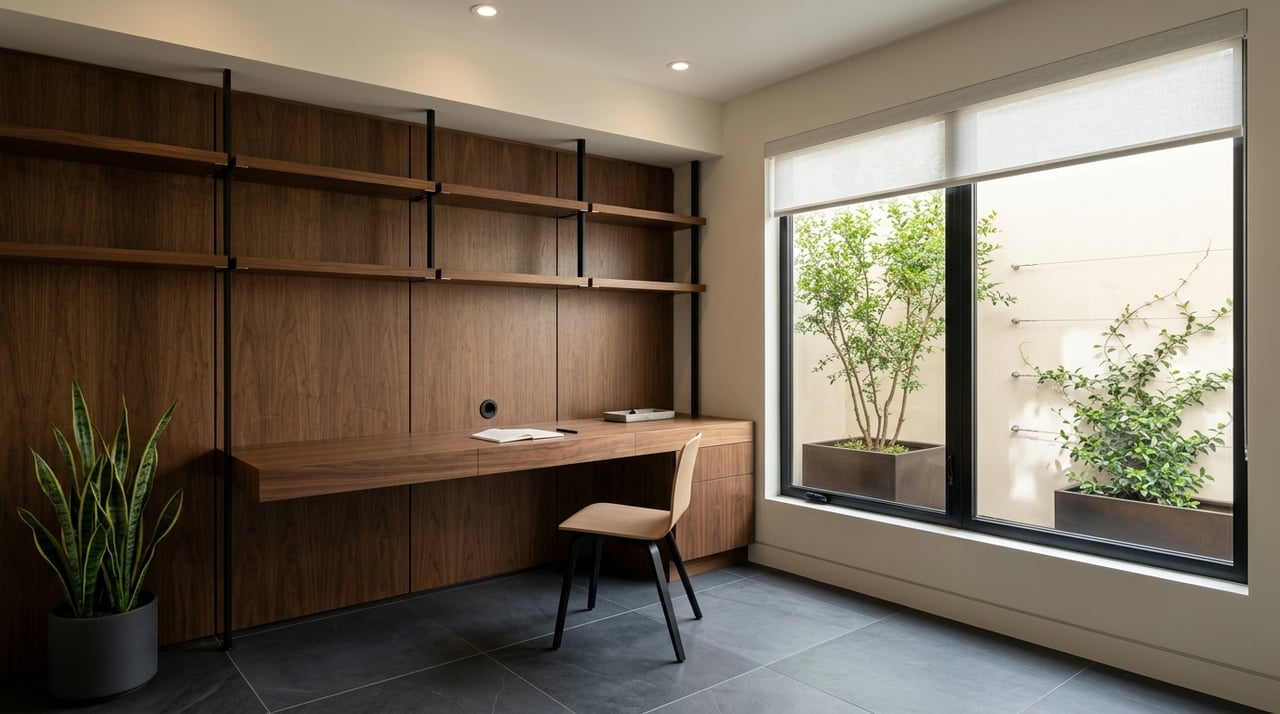
Start by asking where work will really happen. Can the home support a quiet call, a full monitor setup, or a focused afternoon when the household is busy? In apartment-heavy areas, a well-defined flex room or extra bedroom can matter more than a larger but less functional open space.
Menlo Park’s sunny climate can be a major plus, but sunlight only helps if the room works well throughout the day. Check window orientation, screen glare, and whether the space feels comfortable for long hours. Operable windows can also improve comfort, especially if you value fresh air during the workday.
A good remote-work setup is not only about the desk. Patios, balconies, courtyards, yards, and nearby parks can improve how your day feels between calls and tasks. In Menlo Park, places like Fremont Park, Burgess Park, Kelly Park, and Bedwell Bayfront Park can add that breathing room.
Before buying, verify how the home supports internet and cellular needs. Menlo Park shows very high household broadband adoption overall, and some properties like Springline highlight fiber optic wiring and enhanced cellular coverage. It is also smart to map nearby fallback spots such as the library, downtown cafés, or a coworking hub.
The core decision in Menlo Park is not just price or style. It is often whether you want your remote-work lifestyle centered on walkability and shared amenities or on privacy and dedicated space at home.
If you picture yourself walking to coffee, stepping out for lunch, and keeping Caltrain close by, downtown or Central Menlo may feel like the better fit. If you want stronger separation, quieter surroundings, and more room for a dedicated office, the detached-home neighborhoods may better support your routine.
That is where local guidance matters. A smart home search should match not only your budget and design preferences, but also the way you actually work day to day. If you want help comparing Menlo Park homes through the lens of remote-work function, Luxuriant Realty can help you evaluate the trade-offs with clarity and care.
Experience the pinnacle of real estate excellence with Luxuriant Realty. Their dedicated team ensures a seamless and stress-free journey whether you're buying, selling, or managing properties, allowing you to elevate your lifestyle effortlessly.
LUXURIANT REALTY
885 OAK GROVE AVE, STE 302, MENLO PARK, CA 94025 CA DRE# 02190360 | NMLS# 2464074